These 10 U.S. towns have the most long-term homeowners

Published
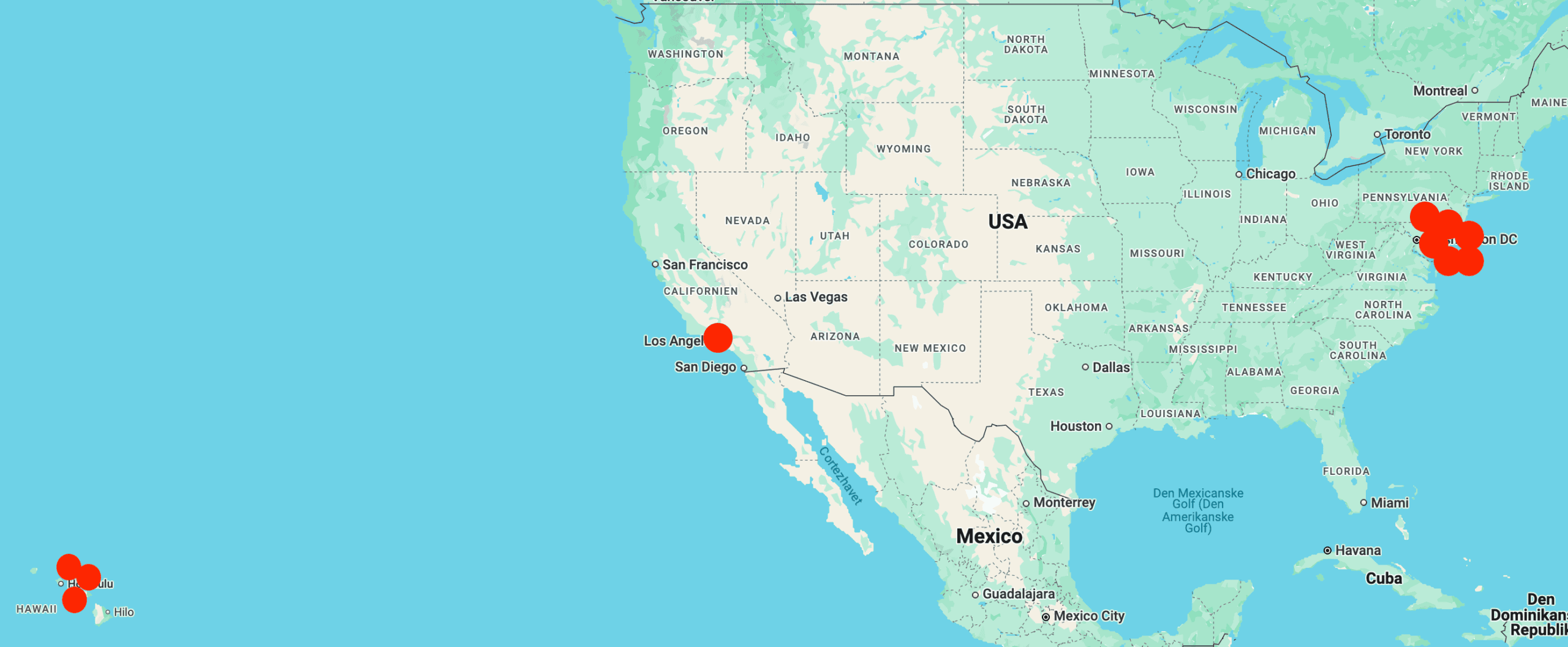
While many Americans relocate every few years, some towns stand out for doing the opposite. In these communities, people tend to stay put for the long haul – often for decades.
By using data from the U.S. Census Bureau, I’ve found the 10 towns in America with the highest share of homeowners who’ve lived in the same home for more than 10 years. The list includes suburbs, coastal towns, and island communities – and nearly all fall outside major metro areas.
Top 10 U.S. towns with the most long-term homeowners
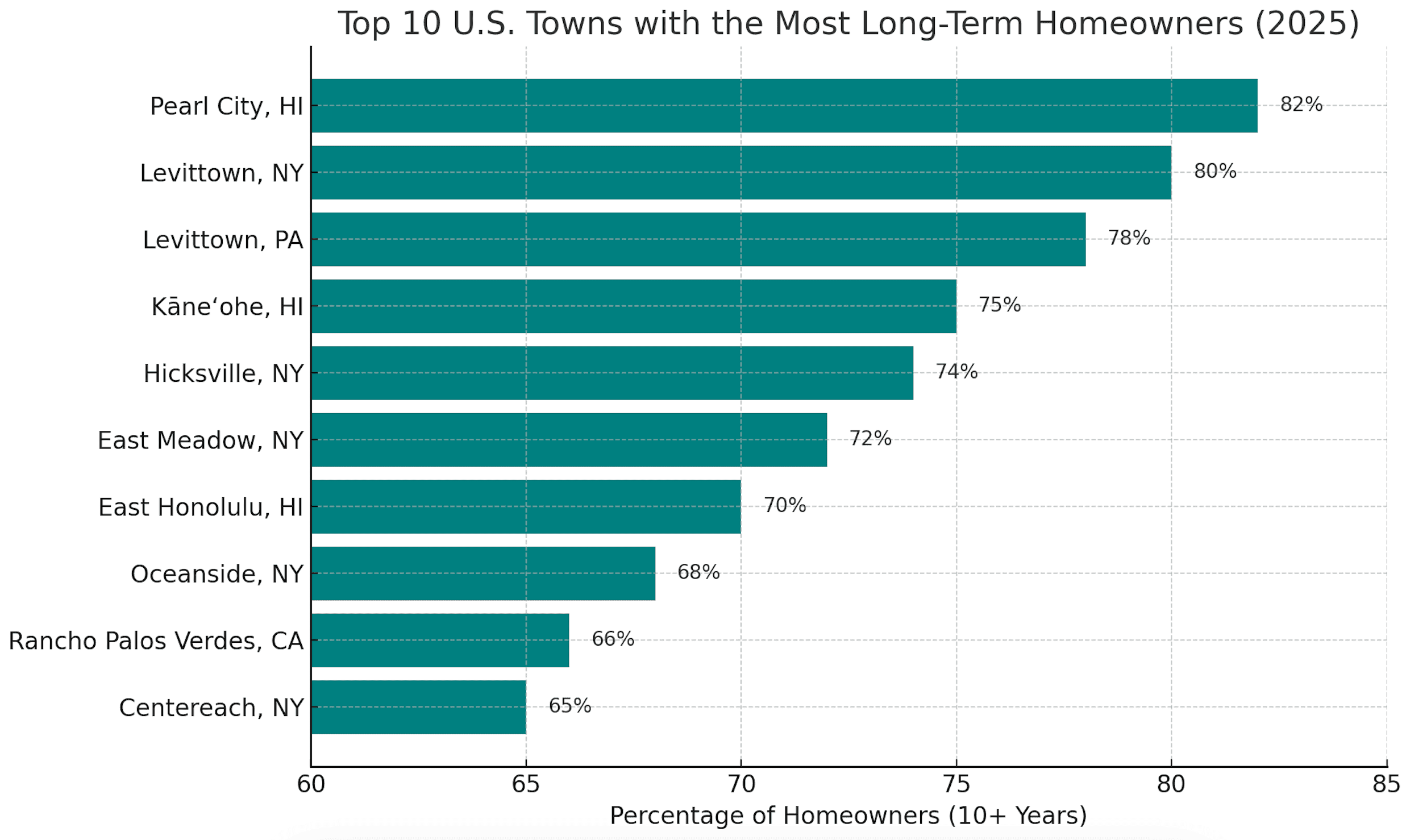
A closer look at the towns
- Pearl City, Hawaii
This Oʻahu suburb has one of the most stable homeowner populations in the country. Many homes have stayed in the same family for generations. - Levittown, New York
This post-WWII suburb helped define American homeownership. Today, around 80% of homeowners have stayed in place for more than a decade. - Levittown, Pennsylvania
Similar to its New York counterpart, Levittown, PA retains a strong sense of community built on decades of local ownership. - Kāne‘ohe, Hawaii
With its bay views and quiet streets, Kāne‘ohe attracts homeowners who settle in and rarely move. - Hicksville, New York
Located on Long Island, Hicksville saw major growth after WWII. Many homes are still occupied by the original owners or their families. - East Meadow, New York
Another Long Island town where the homes – and the people in them – have stayed the same for generations. - East Honolulu, Hawaii
This upscale part of Oʻahu is known for long-term ownership and homes that rarely hit the market. - Oceanside, New York
On the South Shore of Long Island, Oceanside’s homeowners are among the most rooted in the country. - Rancho Palos Verdes, California
Perched on a bluff near Los Angeles, Rancho Palos Verdes is a place where people move in – and stay. - Centereach, New York
A suburban community in Suffolk County where homeownership often lasts for decades.
How this research was conducted
The original method used the 2021 ACS five-year estimates and households whose householder moved in during 2010 or earlier. This is a period estimate about occupancy, not a current count of all owners who have held title for a decade. The full extraction and uncertainty checks are not retained.
I excluded a few communities that met the population threshold if their data was deemed unreliable or incomplete. For example, any town where the margin of error for the relevant ACS estimates was too large to ensure confidence in the ranking was left out. I also omitted places just below the 30,000 population cutoff (even if they had high long-term homeownership rates) to keep the comparison fair.
Why it matters
In a time when mobility is high, these towns represent something different: continuity. Long-term homeownership fosters stronger neighborhood ties, more civic participation, and deeper community pride. And for many of these towns, that’s something worth celebrating.
Sources and scope
- U.S. Census Bureau: Using ACS one-year and five-year estimates
Five-year data covers a period, not a single current-year measurement; use appropriate geography and uncertainty.
Checked