These 10 American towns have the biggest home lots - and they’re not all out on the ranch

Published
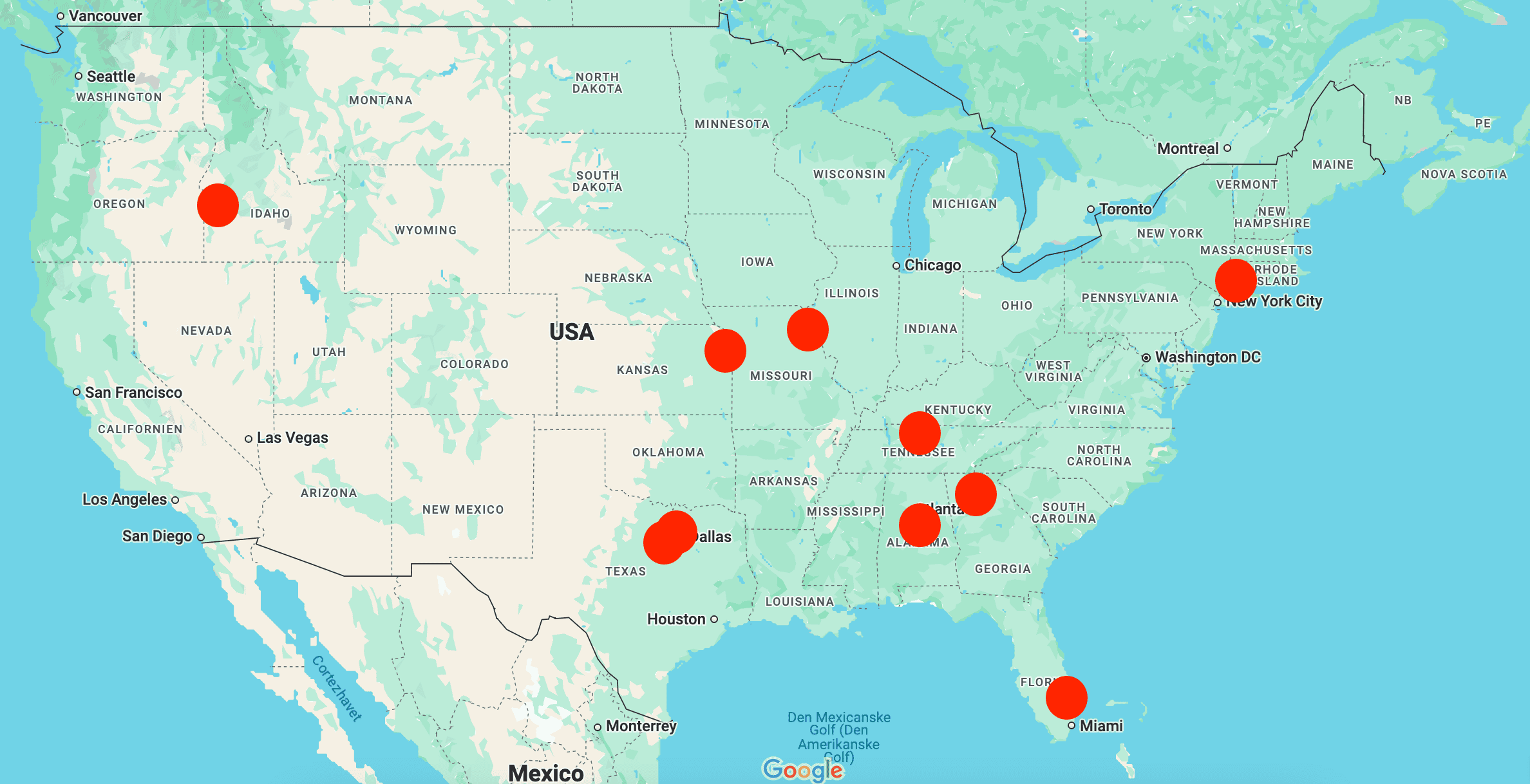
In many places in the world a spacious yard might be 500 square meters – about an eighth of an acre. So it’s always impressive to learn how much outdoor space many Americans enjoy. In some towns, having a big yard isn’t a dream – it’s the norm.
I looked into where in the U.S. homeowners enjoy the largest median lot sizes.
The findings?
The biggest home lots aren’t in major cities, but in smaller towns and affluent suburbs, where zoning rules favor privacy and space.
Here are the 10 towns where people are living large.
Literally.
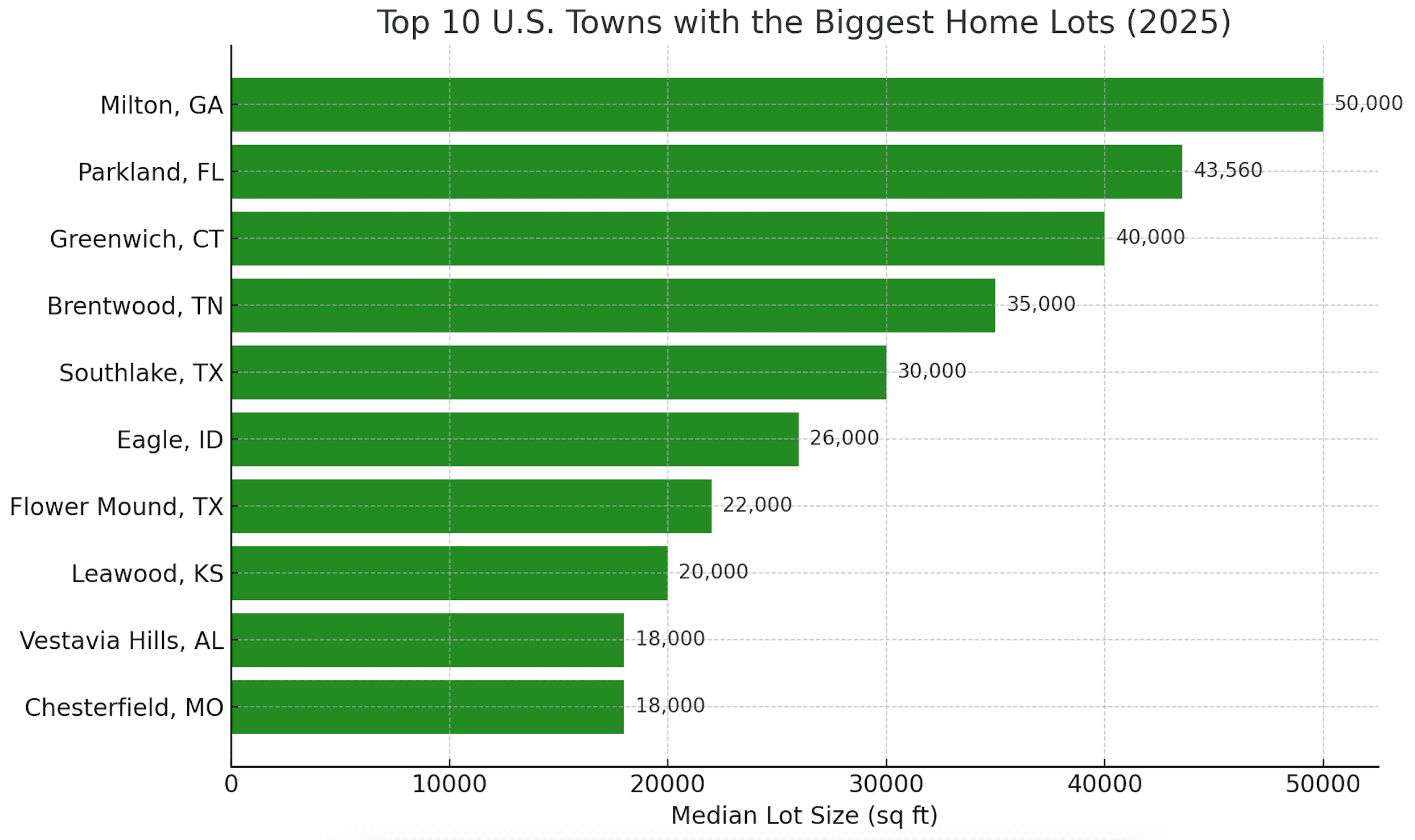
A closer look at the towns
- Milton, Georgia
Just north of Atlanta, Milton blends rural charm with large home lots and equestrian zoning. Most homes sit on an acre or more. - Parkland, Florida
Once farmland, Parkland now offers quiet neighborhoods with lush one-acre lots and a commitment to low-density development. - Greenwich, Connecticut
This NYC suburb is famous for its estates. Even in denser neighborhoods, half-acre lots are common, and one-acre zoning is widespread. - Brentwood, Tennessee
South of Nashville, Brentwood features sprawling homes on wooded lots – many with 0.5 to 1 acre of space. - Southlake, Texas
In the DFW metroplex, Southlake’s suburban luxury comes with one-acre zoning in many neighborhoods. - Eagle, Idaho
Near Boise, Eagle offers scenic living on large parcels, many around half an acre, in newly developed neighborhoods. - Flower Mound, Texas
With protected green spaces and large backyards, this Dallas suburb encourages room to breathe. - Leawood, Kansas
A Kansas City suburb where big lawns, wide streets, and family-sized lots have been the planning standard for years. - Vestavia Hills, Alabama
Hilly terrain and tree-filled yards give this Birmingham suburb a semi-rural feel – even with modern amenities nearby. - Chesterfield, Missouri
On the edge of St. Louis, Chesterfield’s older and newer neighborhoods alike are known for large lots and quiet streets.
How this research was conducted
The original article attributed its lot-size figures to ACS, property records and commercial sources. It does not identify a specific ACS table or retain a complete lot-level dataset that reproduces the medians. We therefore cannot validate the claimed Census-based ranking from this material.
We only included incorporated towns with populations between 30,000 and 200,000. Smaller towns often lack reliable data. Larger cities tend to have smaller lot sizes by design.
The original median figures are retained as part of the publication history. They should not be described as verified ACS town-level medians or used to compare current buying opportunities.
In many parts of America, a spacious yard isn’t just a nice bonus – it’s part of the community identity. These towns prove that even in 2025, there are places where homeowners don’t just live large – they live wide.
Sources and scope
- U.S. Census Bureau: Using ACS one-year and five-year estimates
Five-year data covers a period, not a single current-year measurement; use appropriate geography and uncertainty.
Checked