HOA maintenance checklist – keeping your community in shape

Published Guides and explanations
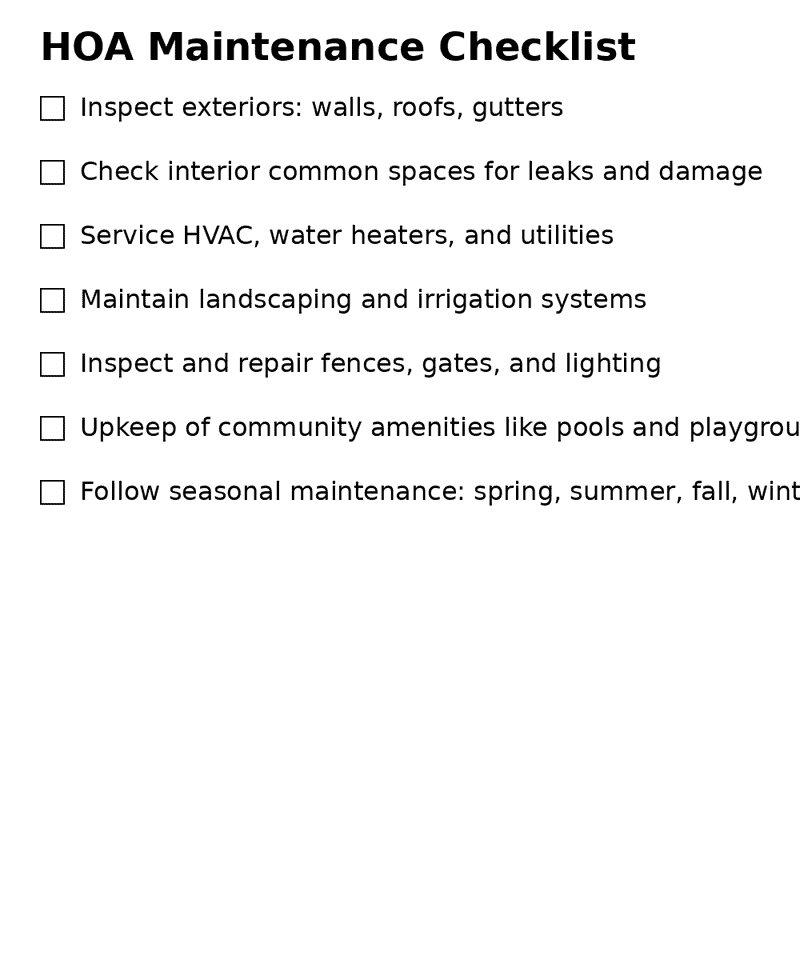
Running a homeowners association (HOA) comes with plenty of to-dos. One of the most important is making sure your neighborhood looks good and works as it should. A HOA maintenance checklist is the easiest way to keep track of it all.
Think of it as your community’s roadmap. It breaks down what needs to be done, when to do it, and who’s responsible. Without it, small issues can slip through the cracks and turn into expensive headaches later.
Why every HOA needs a maintenance checklist
A checklist helps the board and residents stay on the same page. It makes sure jobs get done on time and nothing is forgotten. Given that community members actually do what they’re supposed to do, of course. It also shows homeowners you’re on top of things, which builds trust and helps protect property values.
Without a clear plan, it’s easy for things like a loose handrail, a clogged drain, or a dying tree to go unnoticed until it becomes a bigger problem. A checklist keeps maintenance organized and proactive.
How to use your checklist
- Make it visible: Post it on your HOA website or share it in a resident portal.
- Assign responsibility: Clearly mark whether a task is for the HOA, a contractor, or the homeowner.
- Set a schedule: Daily, monthly, seasonal, or yearly – each job should have a set frequency.
- Review and update: Communities change over time, so update the list at least once a year.
The HOA maintenance checklist
Here’s a sample list you can adapt for your community.
- Exterior areas (Frequency: Seasonal checks; extra inspections after severe weather.)
- Inspect building walls, foundations, and paint.
- Check roofs and gutters for damage, especially after winter storms.
- Maintain driveways and sidewalks – repair cracks before they spread.
- Keep vents, utility boxes, and water spigots in good shape.
- Interior common spaces (Frequency: Quarterly inspections.)
- Inspect flooring in lobbies, clubhouses, and hallways.
- Look for leaks around windows, ceilings, and plumbing.
- Check attic spaces and ventilation.
- Utilities (Frequency: Annual professional inspections; monthly visual checks.)
- Service HVAC systems, water heaters, and pool heaters.
- Inspect water, gas, and electric lines in common areas.
- Test backup generators if your community has them.
- Landscaping and grounds (Frequency: Weekly or seasonal, depending on climate.)
- Mow lawns, trim shrubs, and remove dead plants.
- Keep trees pruned to prevent storm damage.
- Remove weeds and ensure irrigation systems are working.
- Common areas (Frequency: Monthly checks.)
- Maintain fences, gates, and signage.
- Check parking lots for potholes or poor lighting.
- Keep security cameras clean and functioning.
- Community amenities (Frequency: Pools – weekly in summer; Playgrounds – monthly; Sports courts – quarterly.)
- Pools – Clean regularly, check filters, repair tiles and ladders, and inspect heaters ahead of the season.
- Playgrounds – Inspect equipment for rust, loose bolts, or sharp edges.
- Sports courts – Sweep, check for cracks, and repaint lines when needed.
Seasonal tips
- Spring: Focus on landscaping, repainting, and repairing winter damage.
- Summer: Pool upkeep, pest control, and irrigation checks.
- Fall: Gutter cleaning and tree trimming.
- Winter: Snow and ice removal, heating system checks.
Documenting your maintenance work
Keep a record of each task, its date, findings and responsible person. This supports planning and follow-up, but a completed checklist does not in itself prove compliance with every safety or inspection requirement.
Keep it simple, but consistent
Your HOA maintenance checklist doesn’t need to be complicated. Start small, add tasks as needed, and keep it realistic. The goal is to create a habit – not a binder of to-dos that no one follows.
A well-maintained community isn’t just about looks. It’s about safety, comfort, and protecting everyone’s investment.
Sources and scope
- Florida Statutes, Chapter 720: Homeowners’ Associations
Florida jurisdictional example only; association governance, records, assessments and member procedures
Checked