Your 2026 HOA board checklist (copy‑ready guide)

Published Guides and explanations
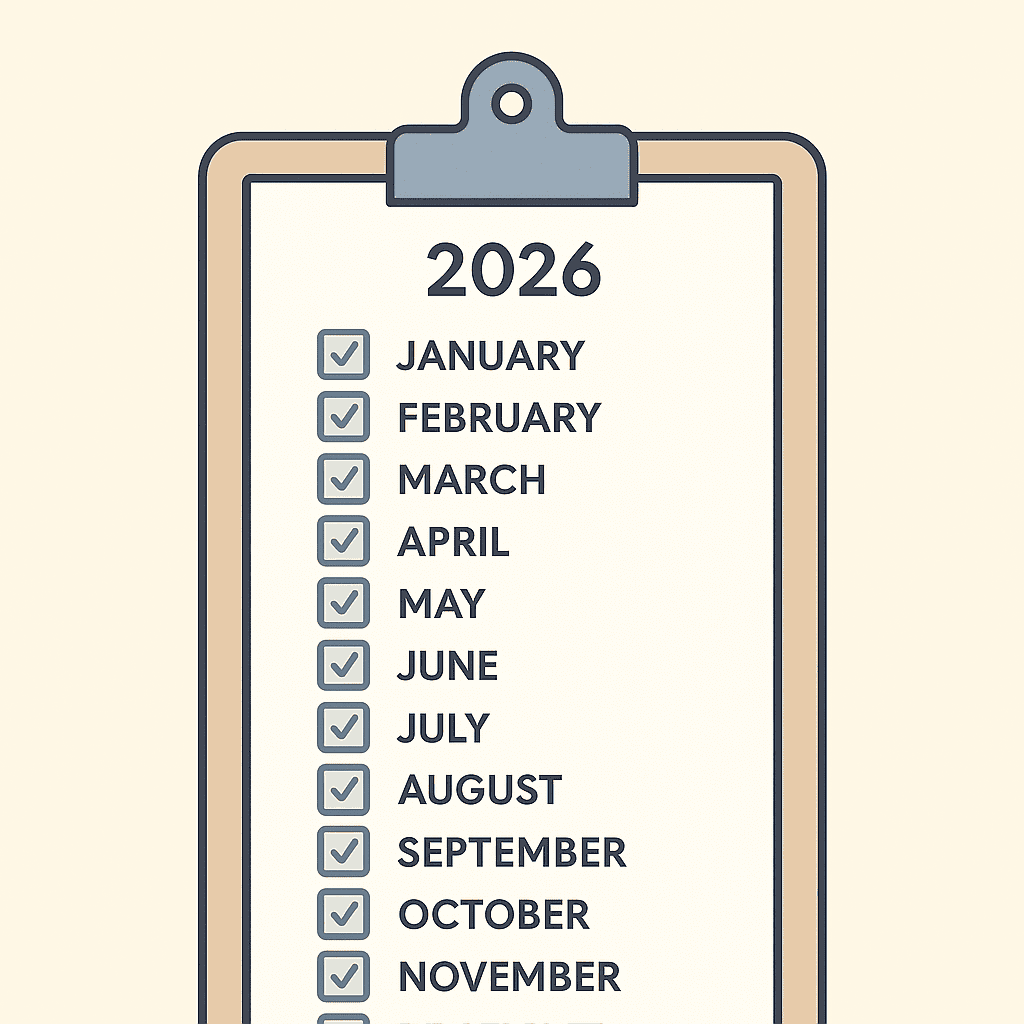
Use a HOA annual calendar to run the year on rails. It lines up meetings, notices, maintenance, the budget cycle, and elections so nothing is missed. That way residents know what’s coming. This guide explains what to do each month, why it matters, and what proof to keep.
Here we go.
What your HOA annual calendar should include
- Board, committee, and annual meetings
- Preventive maintenance
- Reserve projects
- Amenity open/close dates
- Election milestones
- The budget cycle
- Insurance renewals
- Holidays
- Community events
- Newsletter
Keep these visible to the whole board. We’ll go through it below.
Tip: If you need a safe place to store this information you can consider Velabo.
Ground rules before you plan
- Follow your bylaws and state notice windows for the annual meeting and elections.
- Refresh governing documents. Share the current versions on your website/portal and welcome packs.
- Plan communications: newsletter cadence, event dates, and holiday closures.
- Mind risk and money: schedule audits, tax prep/filing, and insurance reviews.
Month‑by‑month board checklist for 2026
Each month lists Why, Action, and Proof to keep (minutes, notices, or files to archive).
January
Why: Start clean and set predictability.
Action: Close prior year; adopt meeting schedule for the full year; republish current rules/bylaws online.
Proof: Approved calendar in minutes; updated documents posted.
February
Why: Tax prep and committee rhythm.
Action: Prepare bank records and ledgers and coordinate the accountant’s year-end work. Vendor tax forms may already be due by this point; schedule collection and filing from the applicable tax year and actual deadline rather than waiting for February.
Proof: Tax packet checklist; committee recommendations.
March
Why: Compliance and annual meeting planning.
Action: Confirm tax filing timeline; pick the annual meeting date; count back to set your official notice send date.
Proof: Calendar entry with notice window; draft agenda.
April
Why: Preventive maintenance beats repairs.
Action: Gutters, drainage, safety inspections; publish amenity opening plans (pool/BBQ/club room).
Proof: Vendor reports; resident notices.
May
Why: Summer runs smoother when pre‑booked.
Action: Reserve vendors/venues for events and clean‑up days; set newsletter deadlines.
Proof: Event plan; newsletter schedule.
June
Why: Budgets need lead time.
Action: Kick off the budget cycle (actuals, reserve study assumptions, vendor proposals); start insurance review.
Proof: Budget working file; insurance broker summary.
July
Why: Contractor lead times stretch.
Action: Book late‑summer projects; announce any seasonal closures.
Proof: Approved work orders; posted notices.
August
Why: Catch‑up and fall prep.
Action: Mid‑year common‑area walk‑through; confirm fall meeting rooms/remote options.
Proof: Walk‑through punch list; bookings.
September
Why: Owners expect clarity.
Action: Build the draft budget and schedule an owner review window if your practice allows; start the election track (call for candidates, prep ballots/proxies).
Proof: Draft budget; candidate call; ballot drafts.
October
Why: Remove surprises before votes.
Action: Finalize budget numbers; assemble the annual‑meeting packet (notice method, quorum plan, tellers/proxies, run‑of‑show).
Proof: Final budget; meeting packet.
November
Why: Notice windows and expectations.
Action: Send annual‑meeting notice per bylaws/state law; publish holiday schedules and any office/amenity closures.
Proof: Notice copy with send dates; holiday schedule.
December
Why: Close strong and seed next year.
Action: Close out action items; archive minutes, policies, and the final budget to the website/portal; add known 2027 renewals, audits, and projects to the calendar.
Proof: Year‑end archive checklist; 2027 placeholders.
Maintenance rhythm that prevents emergencies
Map daily/weekly tasks (cleaning, basic landscaping), monthly/quarterly inspections (playgrounds, lighting, gutters), and annual work (roof checks, pavement sealing) across the year. Aim to spread labor and avoid critical paths during elections and the budget vote.
Elections & meetings (compliance first)
Your documents define when to hold the annual meeting and how to notice it. Build backward from the meeting date: candidate call → ballot/proxy prep → official notice → meeting run‑of‑show (agenda, quorum, teller plan). This discipline reduces disputes.
Budget & reserves (start in early summer)
Gather actuals, check reserve‑study assumptions, and request vendor proposals in June. Publish a draft budget (if customary). Tie reserve projects to visible outcomes so owners see why each line item exists.
Communications that reduce friction
Plan newsletters, event dates, and holiday notices in advance. Put closures and amenity dates where people look first (homepage, email subject lines, lobby screens). Predictability makes everything easier.
FAQ – HOA board checklist
- What makes a “good” HOA annual calendar? It’s complete, realistic, and visible to the whole board. It shows meetings, maintenance, budget, elections, and resident touchpoints. It assigns an owner for each item.
- How early should we start the budget? Begin in June. You’ll need time for proposals, reserve inputs, and owner review before adoption.
- How do we avoid election drama? Publish a clear timeline. Communicate eligibility rules, notice method, and quorum plan. Rehearse the run‑of‑show.
- What documents should we archive each year? All minutes, the adopted budget, policies, notices (with send dates), audit/review letters, insurance binders, and major vendor reports.
- Does Velabo solve all of these issues? No, not all. We do have a shared calendar, website, safe document storage, and a digital bulletin board. Velabo also has accounting and community charge tools. Your board still needs to prepare its actual budget, review the figures and follow applicable financial requirements.
Final note
This guide is a planning aid, not legal advice. Always follow your governing documents and applicable statutes for notice, elections, budgets, records, and tax deadlines.
References
Cedar Management Group. (n.d.). HOA checklist: Setting your eyes on yearly goals. Retrieved September 17, 2025.
Condo Control. (n.d.). HOA yearly checklist. Retrieved September 17, 2025.
Landmark Community Management. (n.d.). HOA annual calendar: Why it’s important and how to make one. Retrieved September 17, 2025.
Sources and scope
- Florida Statutes § 720.303: Association duties and board meetings
Florida example: board meetings, records, budgets and association funds
Checked - IRS: When an information return is required
Payment-year thresholds, payment categories, backup withholding and aggregate electronic filing rules.
Checked